

Finding a stablecoin rewards platform that issues real, spendable value without high technical overhead or unpredictable payout schedules remains difficult. Many alternatives impose high withdrawal limits, lack proper on chain auditing, or require partners to rebuild rewards logic from scratch. This comparison covers cross chain support, programmability, and reliability so developers and programme managers can choose a rewards system that fits their campaign needs.
Table of Contents
GAMI Protocol
At a Glance
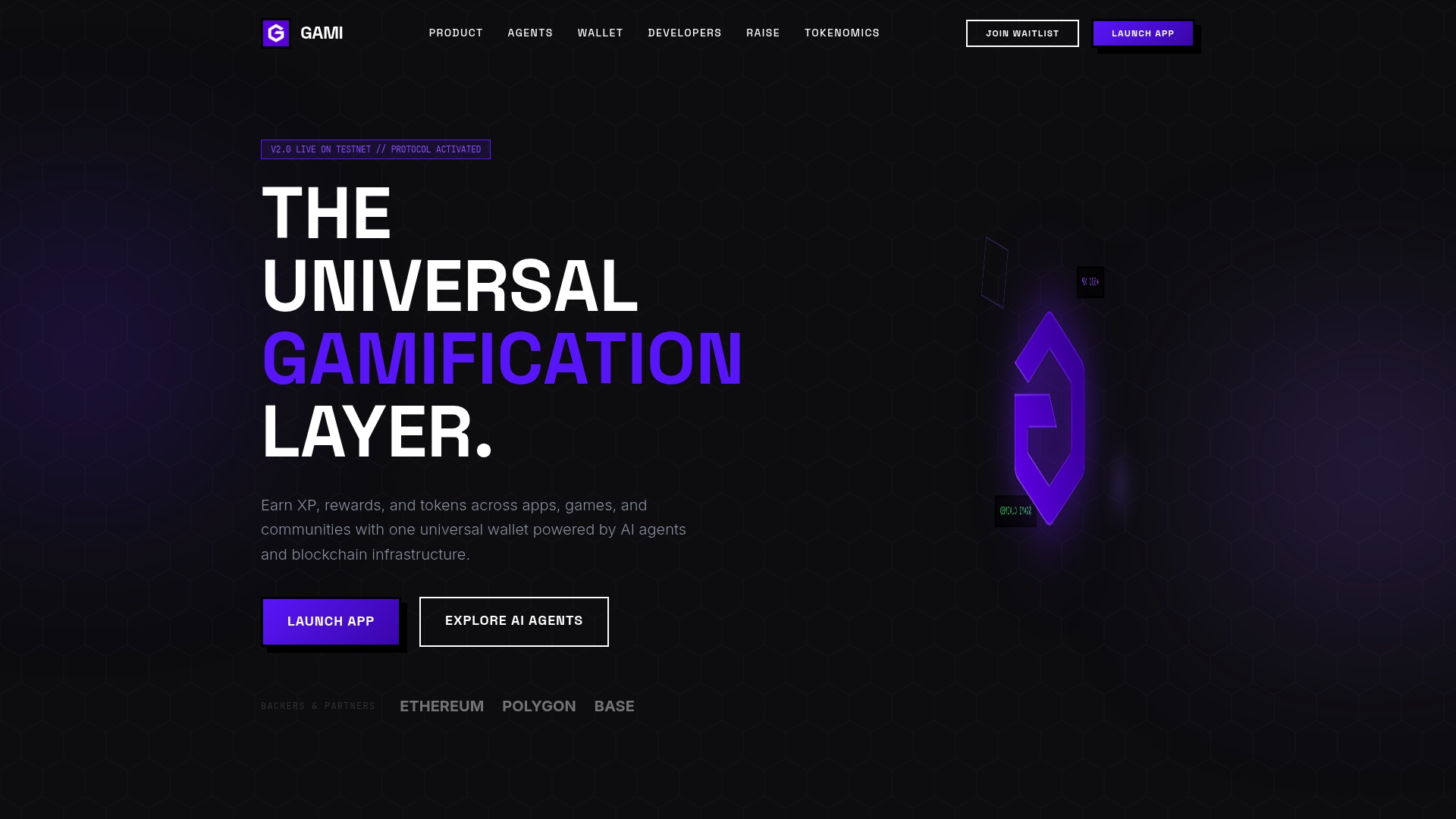
Proprietary AI agents automate quest logic and reward distribution without requiring partners to rebuild their systems. The core service, the Gami Wallet, records XP and rewards in a central dashboard while users earn benefits from browsing partner sites and completing quests. The protocol uses on chain settlement anchored to Base Layer 1 to make reward records auditable and persistent.
Core Features
A universal gamification layer links apps, games, and communities so points and activities travel across platforms. Gami Wallet captures achievements and stable spend balances while AI agents handle quest orchestration, reward multipliers, and distribution. The protocol uses a modular, multi-layer token economy that includes governance via $GAMI, non-transferable XP, and on-chain settlement anchored to Base Layer 1.
Key Differentiator
The GAMI Protocol pairs a modular, multi layer rewards engine with AI orchestration to deliver cross platform gamification and genuine on chain rewards. That combination removes much of the integration work for platforms by delegating quest logic to agents and writing settlements to chain. The result is a system that keeps reward state and reputation verifiable without forcing partners to rebuild their backend.
Pros
On chain settlement anchored to Base Layer 1 provides transparent, auditable reward records and reduces reliance on a single vendor ledger. The multi layer token economy ties governance, non transferable XP, and a stable spend balance into a coherent model that supports reputation and utility rather than pure speculation. Developer tooling is substantial, with SDKs, documentation, and API support that make embedding gamified mechanics into platforms faster. The design emphasises protocol utility and cross platform engagement instead of token speculation.
Cons
- Complex tokenomics require a learning curve for developers and community managers, which can slow initial rollouts.
Who It's For
Developers and platform owners who want blockchain based gamification and persistent reputation across titles. Teams building web3 games, apps, or community platforms will benefit from the SDKs and event driven architecture. Organisations planning on chain loyalty or rewards systems will find the governance and stable spend balance useful.
Unique Value Proposition
The Gami Wallet records XP, non transferable points, and a stable on chain spend balance across multiple partner sites and apps. That single source of truth lets platforms offer cross title quests and shared reputation without moving user identity off their systems. Combined with AI agents for automated reward logic, the wallet reduces integration effort and keeps settlements tamperproof on chain.
Real World Use Case
A gaming platform uses GAMI Protocol to run quests across three titles and to track player reputation in one place. Players complete browser quests and in game tasks and receive stable spend balances and non transferable XP in their Gami Wallet. The platform sends settlement transactions to Base Layer 1 so reward state remains auditable and portable.
Website: https://gamiprotocol.io
merkl.xyz
At a Glance
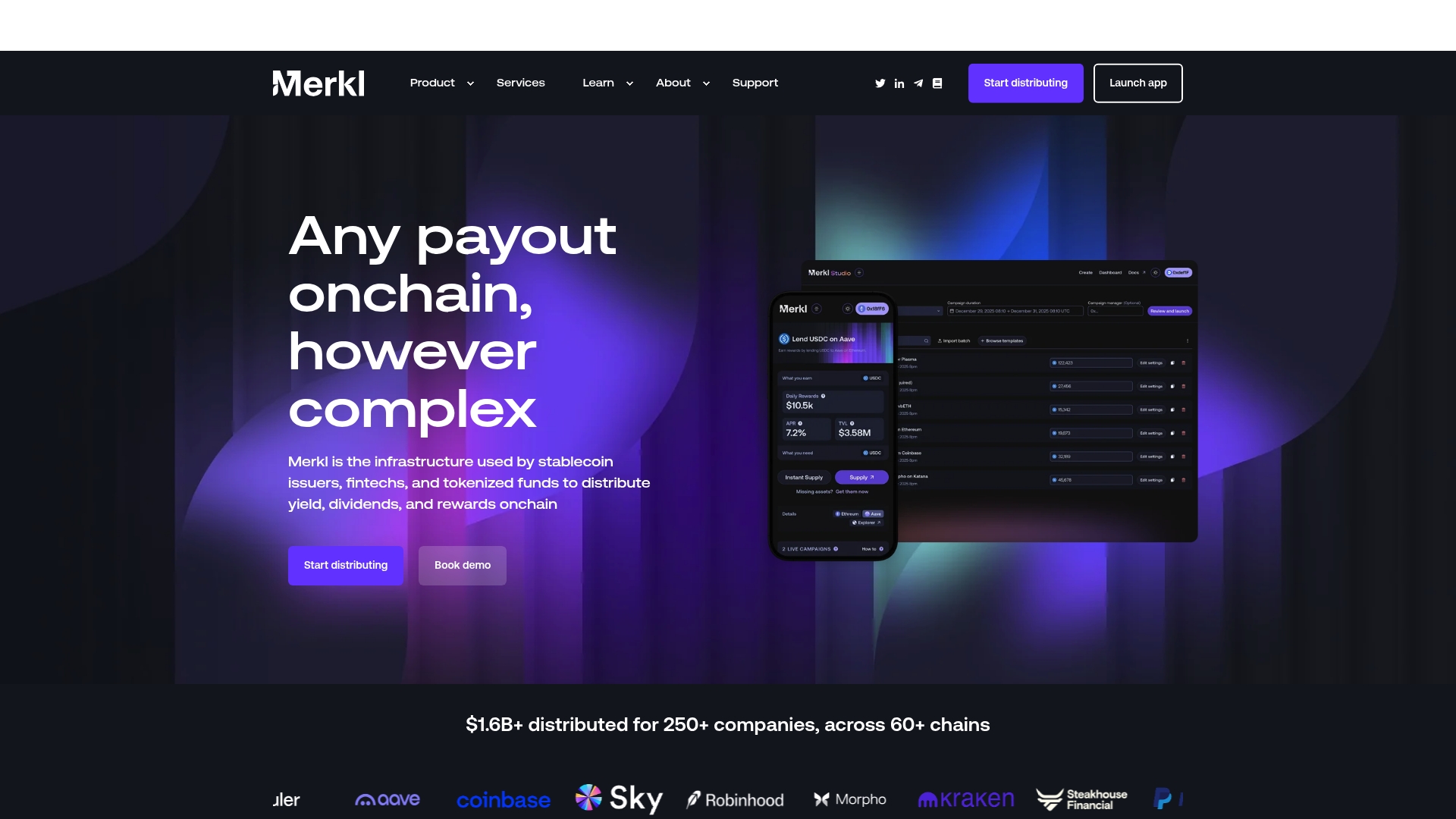
Merkl.xyz reports distributing over $1.6B for numerous clients. It supports onchain distribution across 60+ chains and covers stablecoins, token dividends, airdrops, payroll, and Earn yields. The platform automates batching and scheduled payouts to handle large, recurring distributions.
Core Features
Merkl.xyz supports flexible distribution models with variable, fixed, capped, or target APR and lets you define granular eligibility by holding duration, origin, or blacklists. The system handles stablecoins, Earn yield, token dividends, airdrops, and other custom incentives, and its Merkl Engine automates batching and scheduling of onchain payouts every few hours. API access enables native integration with existing wallets, smart contracts, and backend systems.
Key Differentiator
Merkl.xyz focuses on complex, multi-chain distribution campaigns that combine real time tracking with scheduled batch payouts. This makes it suitable for programs that must map incentives directly to product logic while running across many blockchains.
Pros
Robust support covers distribution use cases from stablecoins to payroll, so teams can centralise payouts rather than run separate scripts. The campaign setup is highly customisable and lets you apply precise eligibility checks and pick variable, fixed, capped, or target APR models, so incentives map closely to product logic. Broad chain support and API access allow integration with DeFi protocols and native stacks, and that figure above suggests the platform has been used for high-volume distributions by multiple clients.
Cons
- Third-party reviews report significant user safety concerns, including claims of scam activity, inability to withdraw funds, and requests for sensitive credentials. These accounts raise trust and security issues for prospective users.
- Platform reputation issues may deter adoption, particularly among teams that require a strong, independently verifiable track record. That can slow partner onboarding.
- Campaign management may be complex for small teams or those without dedicated blockchain engineering resources.
When It May Not Fit
If your team cannot perform thorough security due diligence, this platform may present an unacceptable risk given the reported safety concerns. If you prefer a vendor with a long history of independent audits and public incident transparency, Merkl.xyz may not meet that requirement. Small projects with simple, one-off airdrops may find the platform's feature set more complex than necessary.
Who It's For
Stablecoin issuers, fintechs, and DeFi protocols that need automated, customisable onchain distribution across multiple chains. It suits engineering teams that can integrate via API and manage smart contract flows for recurring payouts. Organisations planning high-volume, programmatic rewards will get the most value.
Real World Use Case
A protocol distributes yield to stablecoin holders based on activity signals. Merkl.xyz automates eligibility checks, computes per-user payouts, and batches onchain transactions, which reduces manual operational overhead and keeps payouts regular.
Pricing
Not applicable — informational only. There is no public pricing listed, so commercial terms, billing model, and volume discounts require direct contact with the vendor.
Website: https://merkl.xyz
Spree Finance
At a Glance
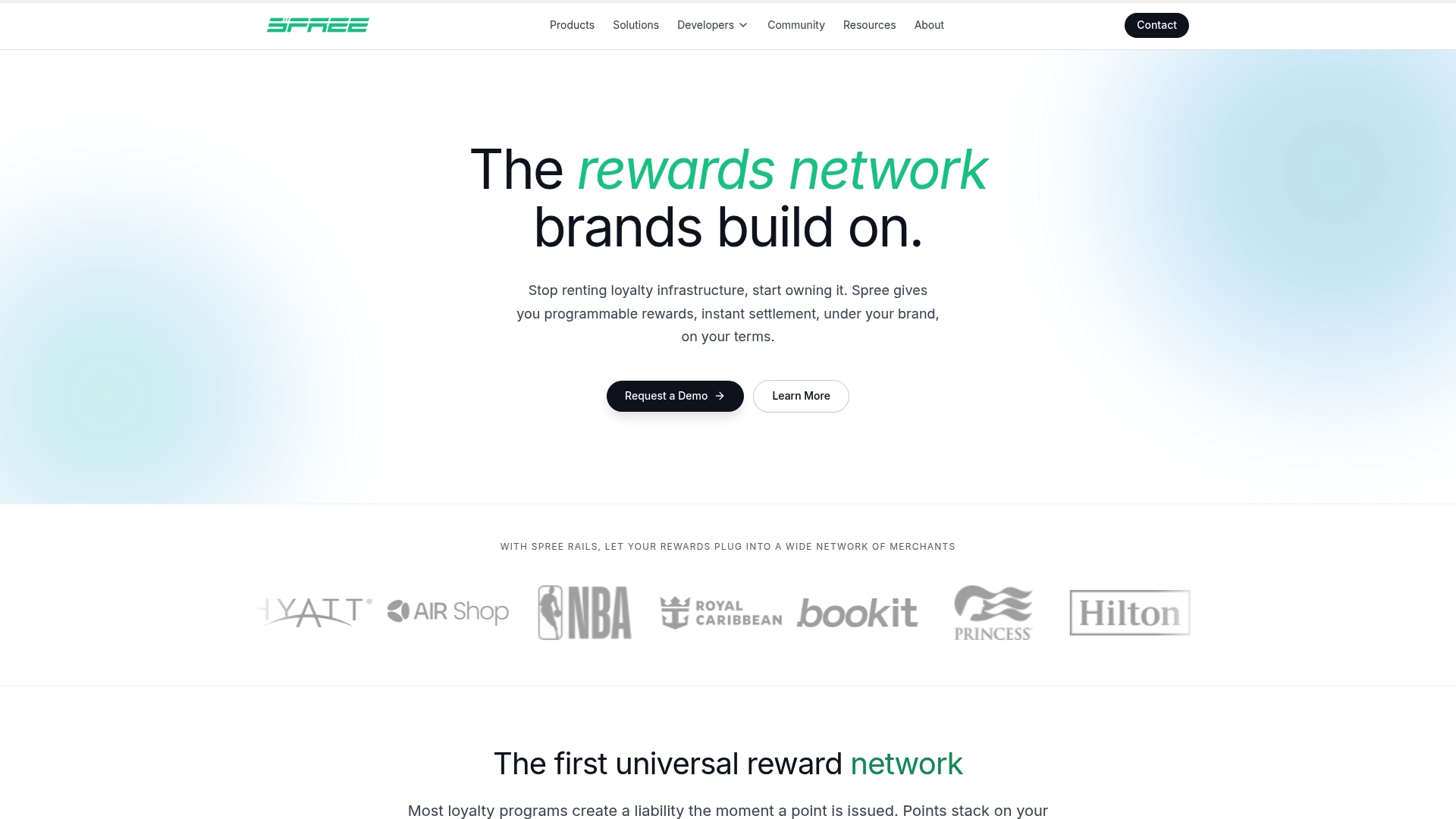
Spree Finance reports access to over 4 million merchants worldwide via a single API. The platform issues rewards backed by USDC and other stablecoins with instant settlement and no point debt. It targets enterprise brands that need real-time payouts without carrying balance sheet liabilities.
Core Features
Spree Finance combines APIs and full SDKs for direct integration, plus campaign management tools for design, tracking, and governance. Rewards are programmable with condition based conversions and rule sets that control issuance and redemption. A white label marketplace lets partners offer redemption across a broad merchant network while on-chain governance provides traceability.
Key Differentiator
The product’s standout is its Unified API that connects brands to large merchant reach and permits instant, cross-brand reward settlement. That merchant reach allows brands to deliver spendable rewards immediately rather than deferring liability on their balance sheet. This focus suits firms that want reward utility at scale.
Pros
Customer support is responsive and helpful, which speeds resolution during integration and campaign setup. The platform’s UI reduces onboarding friction and makes campaign changes straightforward for programme managers. Users report Fast payout processing and broad merchant choice, and the solution includes on-chain governance for auditability and traceability.
Cons
- Inconsistent bonus awards and varying reward conditions can frustrate recipients and complicate campaign communication.
- High withdrawal minimums limit access for smaller customers and can delay redemption for low-value earnings.
- Changing account email addresses is reported as difficult, which reduces account flexibility and user convenience.
- Users have reported significant loss streaks that may erode trust and satisfaction with reward outcomes.
When It May Not Fit
Spree Finance is primarily designed for enterprise deployment and requires engineering capability for API or SDK integration. Smaller brands with minimal technical resources may find the integration cost prohibitive. If predictable, consistent micro rewards are core to your programme, the reported rule inconsistencies and high withdrawal thresholds may cause friction.
Who It's For
This product suits loyalty programme managers, enterprise brands, travel groups, and fintech companies that need scalable, programmable rewards with real-time settlement. It fits organisations that can allocate development resources to integrate via API or SDK. It also suits brands that prefer not to carry rewards on their balance sheet.
Real World Use Case
A hotel chain integrates Spree to settle a guest’s reward instantly at check-in and to allow immediate redemption at partner restaurants and retailers. The chain uses programmable rules to convert earned points to spendable stablecoin credits. Guests leave satisfied because they can spend rewards the same day.
Pricing
Pricing is not applicable. This entry is informational only.
Website: https://spree.finance
Playzo

At a Glance
Playzo's marketing materials state games can be built in minutes to a day, which is unusually fast for a gamification platform. The claim positions the product for teams that need quick campaign turnaround. Reports from third parties however raise questions about reliability and payout handling.
Core Features
Playzo offers a no-code editor and a large library of editable templates so non-technical staff can assemble quizzes, spin wheels, and short games. You can embed experiences on websites, apps, and social media, and add video and image content inside interactions. The platform also includes analytics for tracking participant behaviour and basic conversion signals.
Key Differentiator
Playzo makes rapid creation the core selling point by combining template breadth with an editor aimed at marketers and educators. That focus lets teams reuse creative assets and deploy across channels without developer support. For organisations that value speed and simple cross‑channel publishing, this approach reduces handoffs and calendar friction.
Pros
The editor and templates let marketers and educators produce engagement assets without coding, so campaign builds stay with in‑house teams. Omnichannel embedding means the same game can run on a website, inside an app, and on social channels, which reduces creative duplication. Analytics give behavioural signals you can act on, such as which questions drop engagement or which prize formats convert best. Playzo's reported rapid build times also shorten campaign production cycles, according to the vendor's materials.
Cons
- Third‑party reviews report frequent bugs and technical glitches that interrupt gameplay and reporting.
- Several accounts describe slow or unreliable customer support when issues arise.
- Reports of delayed or blocked withdrawals have caused users to question the platform's trustworthiness.
When It May Not Fit
Do not choose Playzo if you need ironclad operational stability for high‑volume campaigns. Organisations that must rely on rapid, responsive support and guaranteed payout processing will likely find the reported support and withdrawal issues unacceptable. Avoid it for compliance sensitive projects where vendor reputation is critical.
Who It's For
Playzo fits marketing and brand managers, educators, and digital content creators who need fast, do‑it‑yourself gamified experiences. It suits small teams that value speed over deep custom engineering and that can tolerate occasional platform instability. Use it when you want quick audience testing rather than mission‑critical prize fulfilment.
Real World Use Case
A retailer built a holiday microsite using Playzo templates to run quizzes and prize draws across the website and Instagram. The team launched the first campaign the same day and tracked which quiz questions drove sales clicks. The campaign highlighted conversion opportunities but required manual follow up where technical glitches affected a small subset of entrants.
Pricing
Not applicable. The product listing states pricing is informational only. Contact Playzo via the website for current plans, limits, and any enterprise arrangements.
Website: https://playzo.io
Bitget Wallet

At a Glance
Bitget Wallet reports 100 million users worldwide as of 2026. The vendor advertises a $300 million user protection fund and claims support for more than 130 blockchains. The product combines NFT support, staking and yield farming, plus built in market analytics for members and developers.
Core Features
Member accounts aggregate assets across multiple chains and let members execute cross chain transfers and swaps using built in bridges. The wallet links NFT holdings to marketplace activity and on chain provenance. DeFi access includes staking and yield farming, and it exposes market tools such as the Altcoin Season Index plus developer APIs for trading and cross chain tasks.
Key Differentiator
The clearest angle is broad chain coverage paired with on chain DeFi and a substantial protection fund. That combination aims to give member communities custody like assurances alongside reward earning and trading. It serves wallet centred communities rather than membership gamification layers such as Gamiprotocol.
Pros
Support for a wide set of chains lets members hold many tokens in one place while avoiding frequent wallet switching. The interface bundles trading, staking and NFT flows so community members spend less time on basic custody tasks. Security claims include professional audits and that protection fund, which helps readers weigh risk versus self custody. Multi language support and global distribution mean the wallet suits members who need localised interfaces and broad market access.
Cons
- No independent third party reviews are available; the vendor materials supply the primary claims.
- Smart contract risk remains; members still must follow strong private key and device security practices.
- Some vendor statements about reach and features are self reported, so due diligence is necessary before moving large balances.
When It May Not Fit
If your organisation requires vendor independent audits and third party validation for compliance, this wallet may not fit. If you cannot accept any smart contract or self custody risk, a custodial service may be more suitable. If your community requires governance that places custody decisions entirely outside vendor control, this solution may not meet that requirement.
Who It's For
Members, collectors and investors who want a single app for multi chain holdings, NFT activity, and DeFi participation. Community members who favour a wallet that combines trading, staking and analytics will find the feature set relevant. It also fits people who accept vendor reported protections as part of their security model.
Real World Use Case
A member uses the app for daily crypto spending, stakes tokens into protocol pools, and sells NFTs on an integrated marketplace without leaving the wallet. Cross chain transfers move assets between chains for yield opportunities, while built in analytics guide timing and allocation decisions. Community support and language options help when questions arise.
Website: https://web3.bitget.com/en/stablecoinEarn
STBL
At a Glance
STBL launches a principal and yield split model that returns value to users and builders rather than a central issuer. The protocol supports issuing Ecosystem Specific Stablecoins backed by real world assets. It also offers a universal, interoperable coin called USST to connect those ecosystems.
Core Features
STBL supports issuance of Ecosystem Specific Stablecoins, while using tokenised real world assets as collateral for transparency and stability. The platform includes a universal interoperable currency, USST, to settle across ecosystems and provide shared liquidity. Programmable stablecoins allow yield sharing and a clear separation between principal and yield to support specialised treasury designs.
Key Differentiator
STBL adopts Stablecoin 2.0 principles through a principal and yield split model that assigns yield back to participants and builders. That approach changes the value flow compared with conventional issuer‑centric coins and targets organisations that want governance over monetary policy. Compared with Gamiprotocol, STBL focuses on institutional issuance and monetary control rather than cross‑application gamified rewards.
Pros
Designed with institutional concerns in mind, STBL emphasises security, compliance, and on chain collateral tracking to support audits and accountability. Its interoperable USST offers a route for cross ecosystem liquidity and settlement, which helps ecosystems move value without relying solely on external stablecoins. The principal and yield split supports custom token economics, so ecosystems keep governance over policy and can share yield with participants.
Cons
- Substantive third party reviews and user feedback are not available. This suggests limited independent validation of live performance.
- The protocol’s architecture and economic design are complex. Teams will likely need specialised expertise to model and operate ESS effectively.
- Public details on user support and onboarding are limited. Organisations should expect to negotiate commercial and integration terms directly.
Who It's For
STBL suits ecosystem builders, institutional investors, and organisations that need programmable, collateral backed stablecoins with governance control. It fits teams that plan to issue a bespoke currency or manage local monetary policy rather than buy an off the shelf stablecoin. Projects without access to on chain asset engineering resources may struggle to implement it.
Real World Use Case
A municipality tokenises local assets to back a community stablecoin and uses the principal and yield split to fund public projects. Residents hold the stablecoin for local payments, and yield flows to both a community treasury and participating service providers. That design keeps monetary control local while using USST for occasional settlement with external partners.
Pricing
Not applicable. STBL’s materials present the offering as informational and technical infrastructure rather than a fixed tiered product. Commercial terms for Money as a Service and deployment are not publicly listed and must be discussed with the vendor.
Website: https://stbl.com
Comparison of alternatives
Each platform evaluated offers unique strengths, with GAMI Protocol distinguishing itself through its cohesive and transparent rewards system. Here, we delve into detailed comparisons to highlight which scenarios each option serves best.
Tailored functionalities for diverse requirements
Every platform brings its distinct focus: GAMI Protocol combines automated orchestration with modular tokeneconomics designed for integration across applications. In contrast, Merkl.xyz offers diverse chain support and batch scheduling, ideally suited for complex multi-chain campaigns.
Strengths that align with specific needs
Platforms such as Playzo emphasise rapid content deployment via non-coding editing tools. Yet, its limited operational reliability is noted. Meanwhile, Bitget Wallet and STBL stand out with features tailored toward ecosystem building, with STBL providing a token model for greater monetary governance.
Best fit
- For organisations seeking a transparent and verifiable rewards system that integrates effortlessly across platforms, GAMI Protocol is the standout choice.
- Teams aiming to leverage a multi-chain distribution strategy with precise customisations will find Merkl.xyz fulfilling their requirements.
- Situations necessitating quick gamification campaign prototypes might favour Playzo, if operational challenges are manageable.
- Enterprises needing economic governance paired with customisable token systems should consider STBL.
Our pick
GAMI Protocol emerges as the most compelling choice for teams prioritising streamlined rewards facilitated by AI agents and underpinned by transparent, blockchain-backed frameworks. While it excels in governance-backed token rewards, teams focusing solely on decentralised integrations may find other options more aligned with their constraints.
The table below presents a concise comparison based on gamification rewards platforms' distinct features and capabilities.
| Platform | Key Differentiator | Best For | Pricing | Notable Limitation |
|---|---|---|---|---|
| Gamiprotocol | Modular rewards engine with AI orchestration | Blockchain gamification developers | Price not published | Complex tokenomics require learning curve for early adopters |
| Merkl.xyz | Handles large-scale, multi-chain reward distributions | Stablecoin issuers, fintechs, DeFi protocols | Price not published | Reported security and reputation concerns |
| Spree Finance | Unified APIs for scalable merchant reach | Enterprise brands needing instant reward settlement | Price not published | High withdrawal minimums limit access for smaller customers |
| Playzo | No-code editor and extensive templates for engagement games | Marketers, educators focused on rapid test scenarios | Price not published | Third-party reports indicate bugs and customer support issues |
| Bitget Wallet | Wide crypto ecosystem integration with user protection fund | Multi-chain collection and DeFi capabilities | Price not published | Requires user diligence regarding vendor claims |
| STBL | Principal-yield split model for bespoke stablecoin issuance | Institutions managing collateral-backed stablecoins | Price not published | Complexity demands expertise for implementation |
How Can Stablecoin Rewards Maintain Trust and Ease of Integration?
Managing stablecoin rewards often means balancing complexity and trustworthiness. Developers and platform owners want a system that offers transparent, on-chain reward records without rebuilding their backend. Gamiprotocol meets this challenge with its multi-layer token economy and AI-driven quest orchestration, reducing integration effort while ensuring reward settlements remain auditable and tamperproof.
Gamiprotocol offers:
- A centralised Gami Wallet to track achievements and stable spend balances across partner sites
- Automated reward distribution by proprietary AI agents
- On-chain settlement anchored to Base Layer 1 for persistent record keeping
Explore how Gamiprotocol supports stablecoin rewards with robust developer tools and governance by visiting https://gamiprotocol.io. Take the next step by connecting your platform to a proven universal gamification layer and deliver verifiable, cross-platform reward experiences.
FAQ
How does Gamiprotocol support transparent reward distribution?
Gamiprotocol provides on-chain settlement anchored to Base Layer 1, ensuring reward records are transparent and auditable. This feature guarantees that partners do not rely on a single vendor and reduces the risk of discrepancies in reward distribution. Implementing Gamiprotocol can simplify your reward tracking processes, giving you peace of mind about the integrity of your system.
What is the difference between Merkl.xyz and Gamiprotocol?
Merkl.xyz focuses on complex, multi-chain distribution campaigns, offering robust support for various distribution use cases, from payroll to token dividends. Gamiprotocol, on the other hand, excels in providing a modular, multi-layer rewards engine tailored for gamification in web3 environments. Choosing Gamiprotocol is ideal for teams looking to integrate gamified experiences without the extensive setup that Merkl.xyz may require for broader distribution models.
Which platform enables instant rewards for customer activity?
Gamiprotocol allows platforms to issue rewards that are immediately available, linking achievements to a stable spend balance within the Gami Wallet. The Gami Wallet ensures that users can earn rewards as they interact with partner sites, making it an excellent choice for organisations focused on real-time customer engagement. You can expect a frictionless reward experience for your users as they complete various tasks across platforms.
Can teams use Gamiprotocol for long-term loyalty programmes?
Gamiprotocol is well-suited for teams building web3 loyalty systems, offering tools that support persistent reputation and cross-title quests. The Gami Wallet provides a single source of truth for tracking user rewards and identity without needing to move data off their systems. This makes it an excellent choice for organisations aiming to implement a sustainable long-term loyalty strategy.
How does Gamiprotocol assist with gamification across platforms?
Gamiprotocol's universal gamification layer allows points and activities to traverse different apps, games, and communities seamlessly. This feature enables a holistic approach to user engagement by ensuring that all achievements and rewards are instantly recognised, which can enhance user retention and satisfaction. You can easily integrate Gamiprotocol's features into your existing systems to boost cross-platform engagement.